
Turning Waste Collection into a Sustainable Business Opportunity
What if collecting waste could become more than a source of income—what if it could become a pathway to entrepreneurship, better livelihoods and a cleaner community?
This vision is at the heart of the Waste Aggregators Training in Cox’s Bazar, supported by Cordaid with technical and programmatic support from the International Labour Organization (ILO).
The training brought together waste aggregators and aspiring entrepreneurs to strengthen their practical knowledge of business development, financial literacy, waste management and market-oriented entrepreneurship.
Through the first two batches, participants explored how everyday waste can be transformed into economic opportunity while contributing to a more sustainable and environmentally responsible Cox’s Bazar.
Why Waste Aggregators Matter
Waste aggregators play an important but often overlooked role in the local waste management and recycling value chain.
They collect, sort, store and supply recyclable materials to different actors in the recycling market. Materials such as PET bottles, HDPE, soft plastics and other recyclable items can move from households and businesses into the recycling value chain through their efforts.
Despite their important contribution, many waste aggregators operate informally and face challenges related to:
- Business planning
- Cost calculation and pricing
- Record keeping
- Cash-flow management
- Customer and supplier relationships
- Waste sorting and quality management
- Market access
- Business growth and diversification
- Access to finance
The Waste Aggregators Training was designed to address these practical challenges through simple, participatory and action-oriented learning.
Batch-01 & Batch-02: Learning by Doing
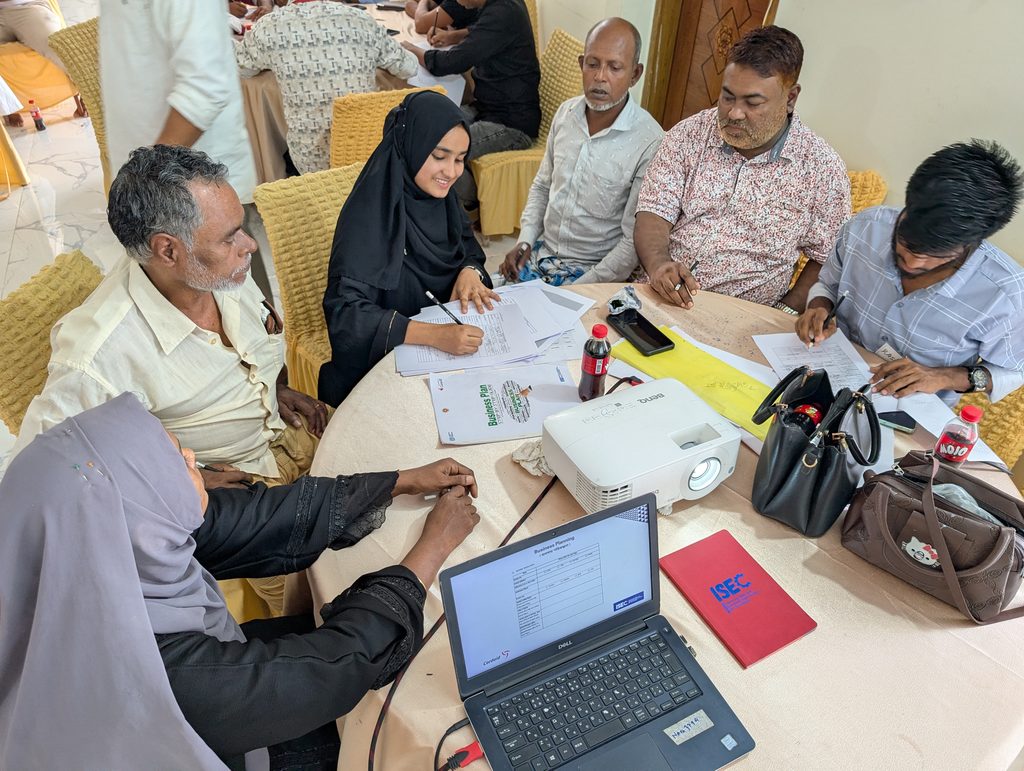
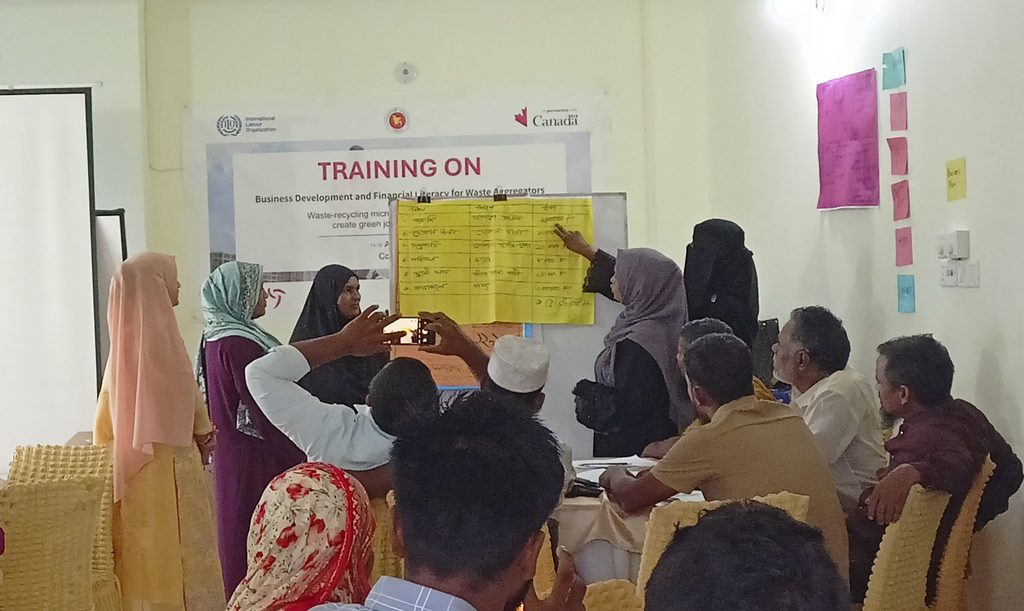
The first two batches created an interactive learning environment where participants were encouraged to connect training concepts with their own businesses and daily activities.
Rather than relying only on theoretical lectures, the sessions emphasized practical examples, group discussions, exercises, demonstrations and experience sharing.
Participants discussed the realities of their businesses and identified ways to improve their existing practices.
The training approach focused on a simple principle:
Learn it. Practice it. Apply it to your business.
This made the sessions particularly relevant for participants with different levels of formal education and business experience.
Building Stronger Waste Recycling Businesses
One of the key areas of the training was business development.
Participants explored how to look at waste aggregation not simply as collection work, but as part of a broader recycling value chain.
The training introduced practical concepts including:
1. Understanding the Waste Value Chain
Participants learned how different recyclable materials move from collection to sorting, aggregation, trading and recycling.
Understanding this chain helps waste aggregators identify where value is created and where they can improve their position in the market.
2. Business Planning
Participants were introduced to simple business planning techniques that can help them define:
- What they collect
- Who they buy from
- Who they sell to
- What resources they need
- How much they invest
- How much they earn
- Where they want their business to go
3. Costing and Pricing
Knowing the actual cost of running a business is essential for making sound pricing decisions.
Participants practiced identifying different business costs and understanding how costs, selling prices and profit are connected.
4. Inventory and Quality Management
Proper sorting, storage and handling can directly influence the value of recyclable materials.
Participants discussed how maintaining material quality and organizing stock can reduce losses and improve selling opportunities.
5. Customer and Supplier Management
A sustainable waste aggregation business depends heavily on relationships.
Participants explored ways to build stronger relationships with suppliers, customers and other actors in the recycling chain through communication, reliability and consistent quality.
Strengthening Financial Literacy
For many small and informal businesses, financial management can be just as important as sales.
The training therefore placed strong emphasis on financial literacy for waste aggregators.
Participants learned practical concepts such as:
- Separating personal and business money
- Recording daily income and expenses
- Understanding profit
- Managing cash flow
- Planning savings
- Making investment decisions
- Understanding basic banking services
- Exploring digital financial services
- Preparing for future business growth
Simple financial tools and practical exercises helped participants understand how better record keeping can provide a clearer picture of their business performance.
A business owner who knows where money comes from, where it goes and how much remains can make better decisions.
From Waste Collection to Entrepreneurship
A major message throughout the training was that waste aggregation can be a legitimate entrepreneurial activity.
With better planning, financial management, market knowledge and quality control, waste aggregators can strengthen their businesses and potentially expand into new opportunities within the recycling sector.
For young people and vulnerable communities, the sector can also create opportunities for income generation, self-employment and entrepreneurship.
The training therefore went beyond teaching technical activities. It aimed to strengthen participants’ confidence as business owners and economic actors.
Creating a More Sustainable Cox’s Bazar
The benefits of strengthening waste aggregators extend beyond individual businesses.
A stronger waste aggregation and recycling value chain can contribute to:
Cleaner communities → Better waste segregation → More recyclable materials recovered → Stronger recycling businesses → Reduced waste going to disposal sites → A more sustainable environment
Waste aggregators are therefore important contributors to the circular economy.
By recovering materials that might otherwise be discarded, they help keep valuable resources within the economic cycle for longer.
For a tourism-focused destination such as Cox’s Bazar, improving waste management also has broader implications for the environment, communities and local economy.
The Role of Cordaid and ILO
The Waste Aggregators Training reflects the importance of partnerships in developing sustainable livelihoods and strengthening local economic systems.
Cordaid has supported the initiative with a focus on strengthening livelihoods, skills and economic opportunities, while the International Labour Organization (ILO) brings its expertise in entrepreneurship development, decent work and enterprise-oriented training approaches.
The collaboration demonstrates how skills development, entrepreneurship and environmental sustainability can work together.
Rather than treating waste management only as an environmental issue, the initiative recognizes the people working within the waste value chain and the economic opportunities that can emerge from a stronger, more organized recycling ecosystem.
Learning Together, Growing Together
The Batch-01 and Batch-02 sessions also created opportunities for participants to learn from one another.
Waste aggregators brought different experiences from their communities and businesses. Their discussions helped identify common challenges as well as practical solutions.
This peer-learning approach was particularly valuable because participants could relate training topics to real situations they encounter every day.
From discussing market prices to calculating costs, managing customers and planning future investments, the learning process remained closely connected to participants’ actual business realities.
What Comes Next?
Training is only the beginning.
The real impact will come when participants take the knowledge from the training room and apply it to their businesses.
Some of the practical actions participants can take forward include:
- Keeping regular business records
- Calculating costs before setting prices
- Improving sorting and storage practices
- Building reliable supplier networks
- Strengthening customer relationships
- Tracking daily cash flow
- Saving regularly for business needs
- Exploring new market opportunities
- Improving the quality of recyclable materials
- Planning gradual business expansion
Small improvements, when applied consistently, can create meaningful changes in business performance.
A Step Toward a Greener and More Inclusive Future
The first two batches of the Waste Aggregators Training in Cox’s Bazar represent an important step toward recognizing and strengthening the role of waste aggregators within the local recycling ecosystem.
The initiative connects three important priorities:
Skills + Entrepreneurship + Sustainability
By equipping waste aggregators with practical business and financial knowledge, the program can help them become more confident entrepreneurs while contributing to better waste management and resource recovery.
A cleaner Cox’s Bazar will require stronger systems—but it will also require stronger people and businesses within those systems.
Waste aggregators are already part of that solution.
With the right skills, support and market opportunities, they can move from simply collecting waste to building sustainable businesses and contributing to a circular economy.
Conclusion
The journey of Batch-01 and Batch-02 shows that meaningful change can begin with practical knowledge.
When waste aggregators understand their businesses better, manage their finances more effectively and connect with markets more strategically, they are better positioned to improve their livelihoods.
With the support of Cordaid and ILO, the Waste Aggregators Training is helping create that pathway—one participant, one business and one recyclable material at a time.
A cleaner community starts with better waste management.
Better waste management starts with empowered people.
And empowered waste aggregators can help build a more sustainable future for Cox’s Bazar.
Related Topics
- Waste management in Cox’s Bazar
- Plastic recycling business in Bangladesh
- Entrepreneurship development training
- Financial literacy for small businesses
- Circular economy in Bangladesh
- Sustainable livelihood opportunities
- Waste recycling value chain
- Skills development for waste aggregators