
Empowering Migrants Through Entrepreneurship and Financial Literacy
Entrepreneurship and financial literacy can help people make informed economic decisions, identify business opportunities, and build a stronger foundation for sustainable livelihoods. For Bangladeshi migrants, practical business skills can be particularly valuable when exploring income-generating activities and planning their economic future.
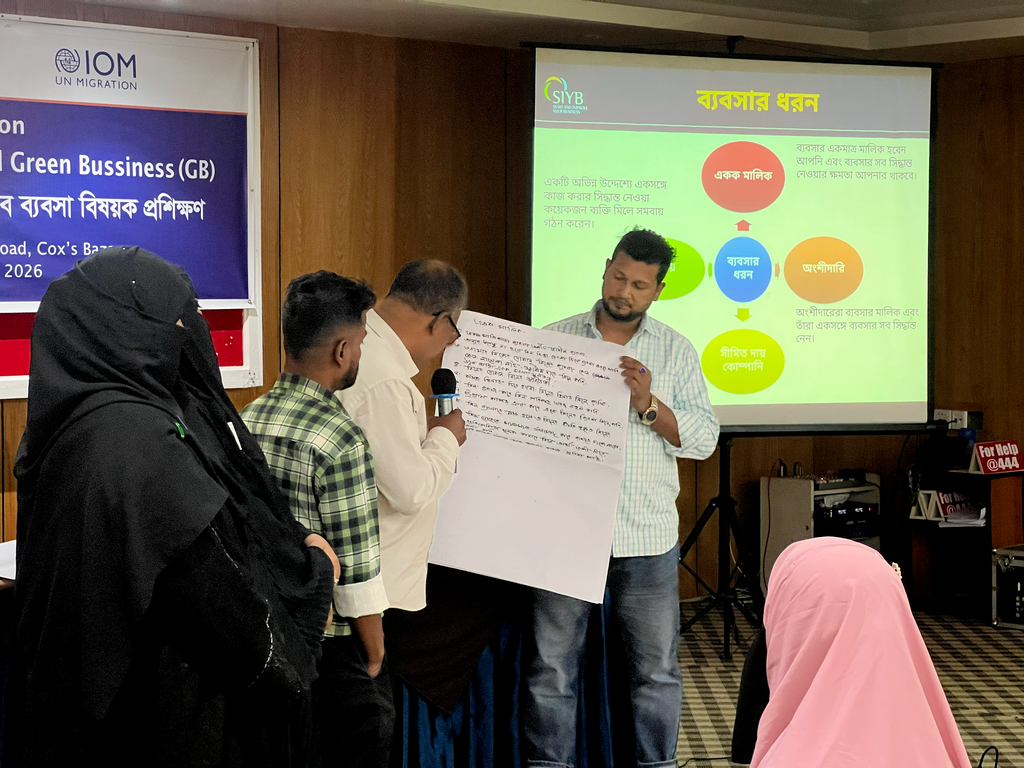
NexShikhon is pleased to announce the successful completion of a Start and Improve Your Business (SIYB) training programme for 36 Bangladeshi migrants, supported by the International Organization for Migration (IOM) – UN Migration, Cox’s Bazar Mission.
The training focused on practical entrepreneurship, financial literacy, and small business planning. Through interactive learning sessions, group activities, practical exercises, and business planning, participants explored how to identify viable business ideas, understand customer needs, calculate costs, manage cash flow, and make informed business decisions.
This initiative reflects the importance of investing in practical skills that can support entrepreneurship, economic participation, and sustainable income opportunities for migrants.
What Is the SIYB Programme?
The Start and Improve Your Business (SIYB) programme is an entrepreneurship development initiative of the International Labour Organization (ILO). It provides structured training and learning resources to help people develop the knowledge and skills needed to start and improve small businesses.
SIYB training covers essential areas of business management, including marketing, costing, pricing, financial planning, and business operations. Its practical approach encourages participants to apply business concepts to real-life situations and develop plans based on their ideas and available resources.
For aspiring entrepreneurs, this approach can help turn a business idea into a more structured plan, while existing small business owners can use the learning to review their business practices and identify areas for improvement.
SIYB Training for 36 Bangladeshi Migrants in Cox’s Bazar
The SIYB training programme brought together 36 Bangladeshi migrants for practical learning on entrepreneurship and financial management.
Rather than focusing only on theoretical concepts, the sessions encouraged participants to share their experiences, discuss business challenges, explore potential opportunities, and work through practical business exercises.
The training covered seven key areas:
1. Identifying Business Ideas and Opportunities
Participants explored how to identify potential business opportunities by considering their skills, interests, experience, available resources, and local market conditions. The sessions encouraged them to think critically about business ideas and assess whether those ideas could meet real customer needs.
2. Understanding Customers and Markets
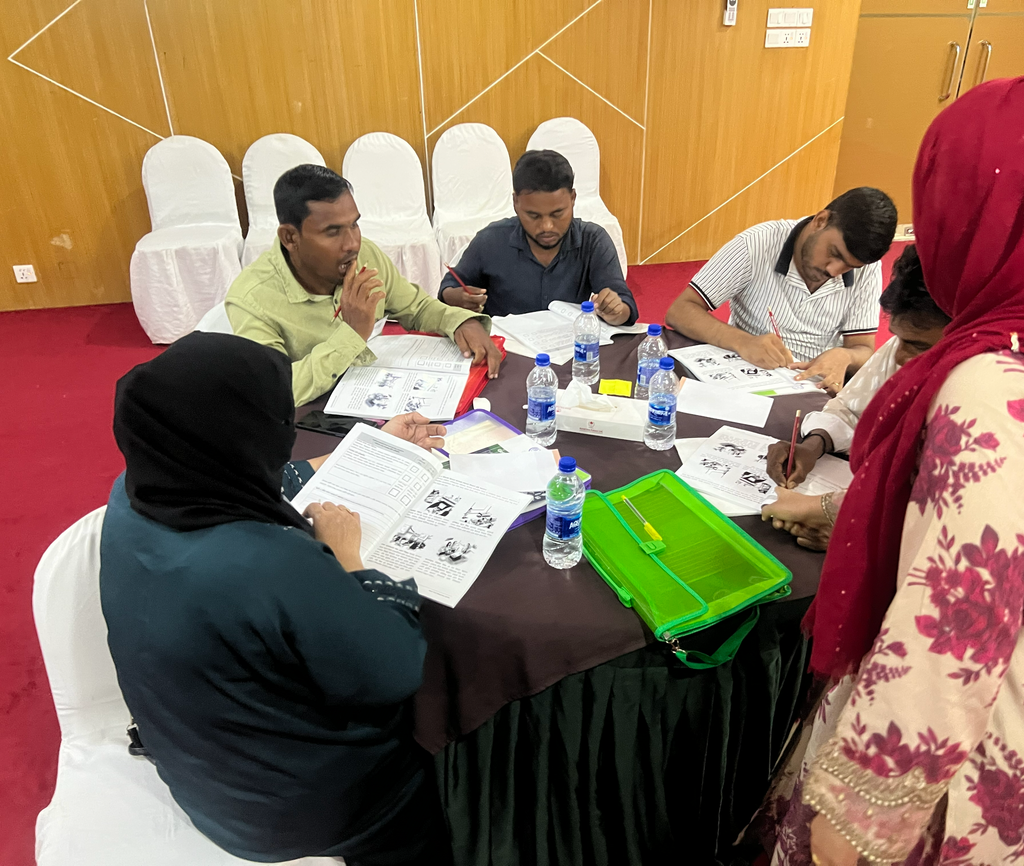
Understanding the market is an important step in starting a business. Participants discussed customer needs, target markets, competitors, and the importance of gathering information before investing money in a business idea.
3. Developing Products and Services
Participants explored how to identify suitable products or services, understand customer expectations, and consider what could make their businesses useful and competitive in the market.
4. Costing and Pricing for Small Businesses
Setting the right price is essential for business sustainability. Participants learned about identifying business costs, calculating product or service prices, and understanding the relationship between costs, sales, and profit.
5. Cash Flow and Financial Management
Financial literacy was a central component of the training. Participants explored the importance of tracking income and expenditure, managing business cash, planning payments, and separating personal and business finances.
These skills can help entrepreneurs make better financial decisions and understand the money needed to operate a business.
6. Practical Business Planning
Business planning helped participants connect their ideas with practical steps. Through business planning exercises, they considered customers, products or services, pricing, costs, sales, and the financial requirements of their proposed businesses.
A business plan can serve as a useful guide for setting priorities, managing resources, and reviewing progress over time.
7. Exploring Sustainable Income Opportunities
Participants discussed how business opportunities could be assessed in relation to market demand, available resources, costs, and long-term viability. The sessions encouraged practical thinking about income generation and the importance of making informed decisions before investing in a business.
Learning Through Participation and Practical Exercises
One of the encouraging aspects of the training was the active participation of all 36 participants. Their ideas, experiences, questions, and aspirations contributed to the learning environment.
Group discussions and practical activities gave participants opportunities to exchange ideas, examine business challenges, and apply entrepreneurship concepts to realistic situations.
This participatory approach is important because effective entrepreneurship training goes beyond delivering information. It creates opportunities for learners to practise decision-making, understand financial concepts, and develop confidence in applying what they have learned.
The training also highlighted the value of connecting business development with financial literacy. Understanding a business opportunity is only one part of entrepreneurship; knowing how to calculate costs, manage cash, set prices, and plan finances is equally important.
Why Entrepreneurship and Financial Literacy Matter for Migrants
Entrepreneurship can provide an alternative or complementary pathway to income generation for people exploring their economic options. However, starting a business requires more than motivation. Entrepreneurs need practical knowledge, market awareness, financial planning skills, and an understanding of business risks.
Entrepreneurship and financial literacy training can support migrants in several ways:
- Improved business knowledge: Understanding the basic principles of starting and managing a small business.
- Better financial decisions: Learning to track income and expenditure, calculate costs, and manage cash flow.
- More structured business ideas: Assessing customers, markets, products, and services before making investments.
- Practical planning skills: Translating business ideas into actionable plans.
- Awareness of sustainability: Considering market demand, operating costs, and long-term business viability.
Training alone cannot guarantee business success. Continued mentoring, access to appropriate financial services, market linkages, and follow-up support may also be important in helping aspiring entrepreneurs apply their learning.
NexShikhon’s Commitment to Entrepreneurship Development in Bangladesh
NexShikhon works to support learning, capacity development, and practical skills that contribute to economic participation and community development.
Through entrepreneurship development, financial literacy, training, and capacity-building initiatives, NexShikhon aims to help individuals and communities strengthen their knowledge and explore practical pathways towards sustainable livelihoods.
The SIYB training for 36 Bangladeshi migrants represents an important learning initiative in this area. By combining business concepts with practical exercises and business planning, the programme created opportunities for participants to explore how entrepreneurship skills can be applied to their own economic aspirations.
NexShikhon values partnerships with development organisations and other stakeholders that invest in human capacity, entrepreneurship, and inclusive economic opportunities.
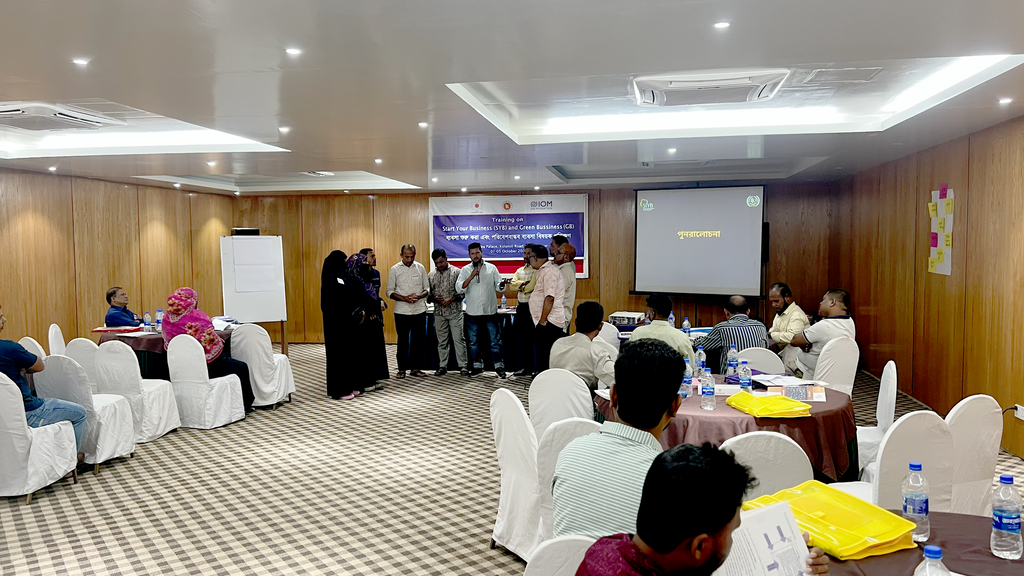
Appreciation to IOM – UN Migration, Cox’s Bazar Mission
NexShikhon extends its sincere thanks to IOM – UN Migration, Cox’s Bazar Mission, for supporting this entrepreneurship and financial literacy training initiative for Bangladeshi migrants.
We also appreciate the efforts of everyone involved in organising and delivering the training and the active participation of all 36 participants.
Collaborative initiatives such as this demonstrate the value of investing in practical learning and skills development to support people as they explore business opportunities and plan for their economic future.
Moving Forward: From Business Ideas to Practical Action
The completion of the training marks an important learning milestone. The next step is to put that learning into practice.
Participants can build on the knowledge gained during the sessions by reviewing their business plans, assessing local market demand, estimating start-up and operating costs, maintaining basic financial records, and seeking relevant advice or support when needed.
With continued learning and appropriate support, entrepreneurship and financial literacy can contribute to better-informed business decisions and stronger foundations for sustainable income generation.
At NexShikhon, we believe practical learning matters when people can use it to make informed decisions, develop their skills, and explore new opportunities.
Learn Next. Lead Next.
For organisations interested in entrepreneurship development, SIYB-based training, financial literacy, business planning, and capacity-building programmes in Bangladesh, NexShikhon welcomes opportunities to collaborate.
Contact NexShikhon to discuss training and capacity-development partnerships.
Frequently Asked Questions (FAQs)
1. What is SIYB training?
Start and Improve Your Business (SIYB) is an entrepreneurship development programme of the International Labour Organization (ILO). It provides structured learning to help people develop skills for starting and improving small businesses.
2. Who participated in NexShikhon’s recent SIYB training?
A total of 36 Bangladeshi migrants participated in the training supported by IOM – UN Migration, Cox’s Bazar Mission.
3. What topics were covered in the SIYB training?
The training covered business ideas, market and customer analysis, products and services, costing and pricing, cash flow, financial management, business planning, and sustainable income opportunities.
4. Why is financial literacy important for entrepreneurs?
Financial literacy helps entrepreneurs understand business costs, track income and expenses, manage cash flow, set prices, and make more informed financial decisions.
5. How can entrepreneurship training support migrants?
Entrepreneurship training can help migrants assess business opportunities, develop practical business plans, strengthen financial management skills, and explore potential income-generating activities.
6. Does NexShikhon provide entrepreneurship and capacity-building training?
NexShikhon works in training, capacity development, entrepreneurship development, and related learning initiatives. Organisations interested in potential collaboration can contact NexShikhon to discuss their requirements.
About NexShikhon
NexShikhon is committed to practical learning, capacity development, entrepreneurship, and community-focused initiatives that support individuals and communities in exploring sustainable economic opportunities.
Learn Next. Lead Next.